
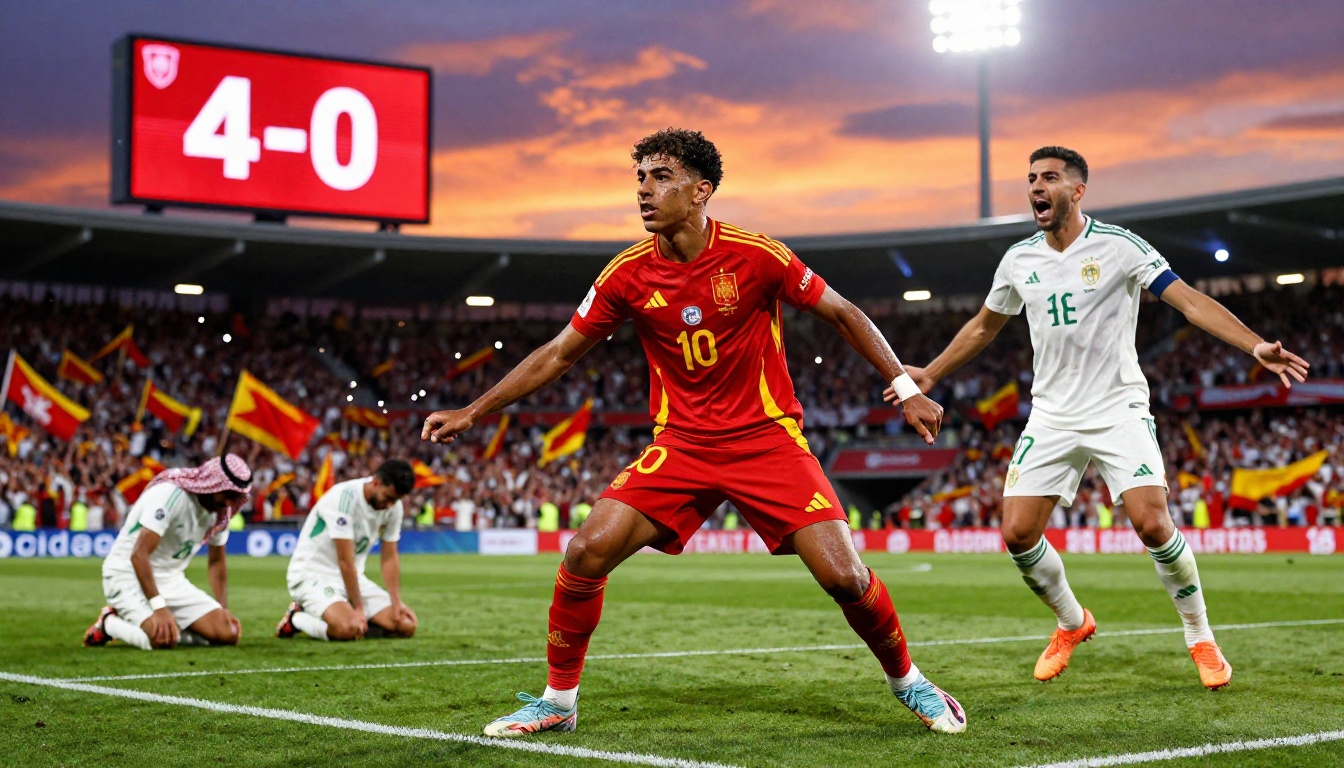
The Spain vs Saudi Arabia clash delivered exactly what many football fans expected on paper: a comfortable Spanish victory. Spain secured a convincing 4-0 win, showcasing superior quality, tactical organization, and clinical finishing. Yet despite the emphatic scoreline, the performance raised several questions about how this Spanish side will fare against stronger opposition later in the tournament.
Goals from Lamine Yamal, a brace from Mikel Oyarzabal, and an unfortunate Saudi own goal helped Spain climb to the top of Group H. While the result strengthened Spain’s position in the competition, the match revealed as much about Saudi Arabia’s weaknesses as it did about Spain’s strengths.
Let’s break down the biggest talking points from Spain vs Saudi Arabia and examine what this result means moving forward.
Spain vs Saudi Arabia: Spain’s Fast Start Set the Tone
The opening stages of Spain vs Saudi Arabia effectively decided the match.
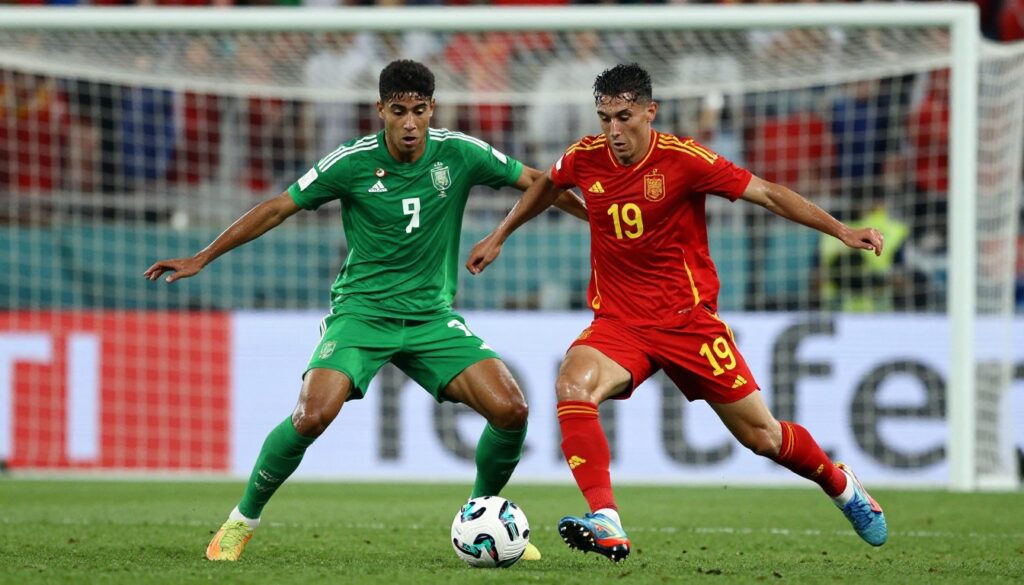
Spain looked sharper from the first whistle, moving the ball quickly and stretching Saudi Arabia’s defensive shape. Luis de la Fuente’s decision to place Lamine Yamal back on the right wing immediately paid dividends.
Just ten minutes into the game, Pedri delivered a superb diagonal pass that found Yamal in space. The teenage star calmly cut inside before curling a beautiful effort into the far corner.
The goal highlighted two important factors:
- Spain’s technical quality
- Saudi Arabia’s lack of defensive discipline
Rather than staying compact after conceding, Saudi Arabia pushed their midfield line forward. This created large gaps between midfield and defense, allowing Spain to dominate possession and create chances with ease.
Against a team as technically gifted as Spain, those mistakes are usually punished.
Lamine Yamal Continues to Shine
Spain vs Saudi Arabia Showed Why Yamal Is Special
At just 17 years old, Lamine Yamal continues to play with remarkable confidence.
His opening goal was outstanding, but his overall contribution was equally impressive. He consistently stretched Saudi Arabia’s defense, combined effectively with Pedri, and created dangerous situations throughout the first half.
Yamal’s ability to make quick decisions under pressure separates him from many players his age.
What stood out most was his maturity. He rarely forced difficult plays and understood exactly when to dribble, pass, or shoot.
Although he was substituted after 67 minutes, likely as part of workload management, he had already made a significant impact.
If Spain hope to challenge for the trophy, Yamal will remain one of their most important attacking weapons.
Spain vs Saudi Arabia: Oyarzabal’s False-Nine Role Was a Success
One of the most interesting tactical elements in Spain vs Saudi Arabia was Mikel Oyarzabal’s role as a false nine.
Instead of staying high between the center-backs, Oyarzabal repeatedly dropped into midfield areas. This movement caused constant confusion for Saudi Arabia’s defenders.
The Saudi center-backs struggled to decide whether to:
- Follow him into midfield
- Hold their defensive line
That hesitation created space for Spain’s wide attackers and midfield runners.
His First Goal Came Through Intelligent Pressing
Spain’s second goal perfectly illustrated their tactical preparation.
Saudi Arabia attempted to play out from the back, but Spain adjusted their pressing structure. Oyarzabal curved his run to block passing lanes, forcing a rushed clearance.
Pedri quickly recovered possession and delivered a clever pass over the defense. Oyarzabal calmly finished the chance.
His second goal showcased sharp movement inside the penalty area and clinical finishing.
The two-goal performance will boost his confidence significantly heading into tougher fixtures.
Saudi Arabia’s Tactical Problems Were Exposed
Defensive Organization Collapsed Too Easily
A major takeaway from Spain vs Saudi Arabia was Saudi Arabia’s inability to maintain defensive discipline.
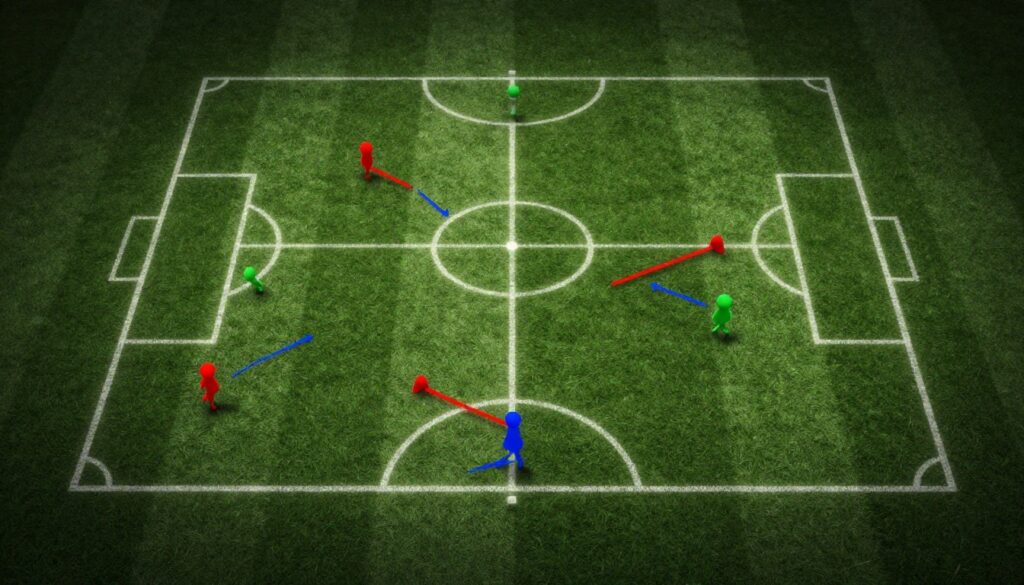
Before conceding, they appeared organized in a compact 4-2-3-1 formation. However, once Spain scored, their structure quickly fell apart.
Several issues became apparent:
Poor Midfield Positioning
The double pivot often became disconnected from the back line.
As Spain circulated possession, large pockets of space appeared between Saudi Arabia’s defensive units.
Ineffective Pressing
Saudi Arabia attempted to press higher but lacked coordination.
Individual players stepped forward while teammates remained deeper, creating easy passing routes for Spain.
Slow Defensive Shifting
Spain repeatedly overloaded the right side before switching play to Nico Williams on the opposite flank.
Saudi Arabia consistently failed to shift across the pitch as a unit, leaving Williams with excessive space.
Against elite teams, such defensive errors are usually punished heavily—and Spain took full advantage.
Spain vs Saudi Arabia: The Midfield Battle Was Completely One-Sided
If there was one area where Spain truly dominated, it was midfield.
The trio of Rodri, Pedri, and Gavi controlled the rhythm from start to finish.
Rodri’s Influence
Rodri dictated possession with his usual composure.
His positioning allowed Spain to recycle attacks and prevent Saudi Arabia from launching meaningful counterattacks.
Pedri’s Creativity
Pedri was arguably Spain’s most influential player.
His vision, passing range, and movement between lines repeatedly opened up Saudi Arabia’s defense.
The assist for Oyarzabal’s first goal highlighted his exceptional awareness.
Gavi’s Energy
Gavi thrived in the spaces Saudi Arabia left behind.
His aggressive pressing and intelligent movement added another layer to Spain’s attack.
Together, the midfield trio ensured Spain rarely lost control of the match.
Spain vs Saudi Arabia: Flooding the Right Side Was Spain’s Best Tactical Move
One tactical adjustment deserves particular attention.
Spain repeatedly overloaded the right half-space with:
- Lamine Yamal
- Pedri
- Pedro Porro
This combination forced Saudi Arabia’s defensive block toward the ball.
As defenders shifted across, Nico Williams often found himself isolated against a single defender on the left wing.
The strategy worked multiple times during the first half.
Modern football increasingly relies on creating numerical advantages in specific zones, and Spain executed this concept effectively.
It may seem simple, but it was one of the key reasons they generated so many dangerous opportunities.
What Spain Still Haven’t Solved
Despite the comfortable win, Spain vs Saudi Arabia did not answer every question.
Can Spain Handle Physical Opponents?
Saudi Arabia offered little resistance physically.
Future opponents such as Uruguay or knockout-stage contenders will present a much greater challenge.
Defensive Vulnerabilities Remain
Pau Torres and Aymeric Laporte were rarely tested.
Spain’s center-backs faced almost no aerial pressure throughout the match.
Whether they can cope with stronger attacking teams remains uncertain.
Rodri’s Recovery Speed
Rodri is exceptional on the ball, but opponents with pace may target the spaces around him.
This remains a potential concern against teams that transition quickly.
Is the False-Nine System Sustainable?
Oyarzabal excelled in this match, but stronger defensive units may react differently.
Disciplined center-backs could limit the effectiveness of his movement and reduce the space available to Spain’s wingers.
What This Means for Group H
The result leaves Spain in a strong position.
Their four points from two matches place them at the top of Group H and significantly improve their qualification prospects.
More importantly, Spain finally looked efficient in front of goal.
For years, critics have questioned whether Spain’s possession-heavy style creates enough scoring opportunities. Against Saudi Arabia, they combined control with clinical finishing.
However, tougher tests are coming.
Uruguay will provide a far more demanding challenge, while potential knockout opponents could expose weaknesses that remained hidden in this comfortable victory.
The real assessment of Spain’s World Cup ambitions may still lie ahead.