
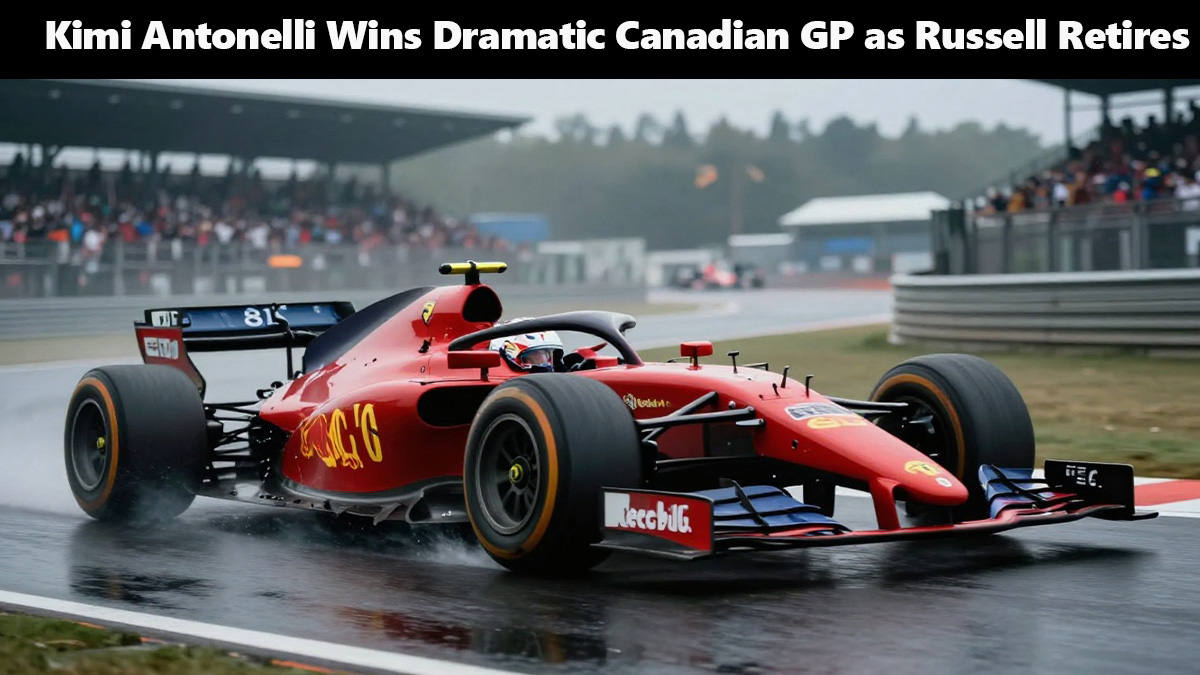
Kimi Antonelli Canadian GP Victory Changes Everything
The Kimi Antonelli Canadian GP performance immediately became one of the defining moments of the 2026 Formula 1 season.
Canada was supposed to belong to George Russell. He had been quicker all weekend. Pole position. Sprint victory.
Stronger pace in qualifying. Better rhythm through Montreal’s fast chicanes. Everything pointed toward Russell finally taking command inside Mercedes.
Then Formula 1 reminded everyone how brutally unpredictable it can be.
On Lap 30, Russell’s Mercedes suddenly slowed. No smoke. No dramatic crash. Just silence. A power unit failure ended what looked like a race-winning drive. Inside the cockpit, frustration exploded instantly as Russell slammed the steering wheel while the Virtual Safety Car was deployed.
Inside the paddock, the Kimi Antonelli Canadian GP result sparked serious conversations about Mercedes’ new team hierarchy.
Ahead of him, Kimi Antonelli never looked back.
The young Italian controlled the restart perfectly and disappeared into the distance, winning by more than ten seconds and strengthening a championship lead that suddenly looks frighteningly serious.
For Mercedes, the Canadian Grand Prix delivered both celebration and concern at the same time.
Table of Contents
Mercedes’ Internal Battle Explodes in Canada
The opening 30 laps were chaos with a narrative. Russell led, then Antonelli. Norris briefly swept past both at Turn 1 on intermediates that were boiling on a drying track, pitted, and vanished from the front.
After that, the two silver cars went at each other with the restraint you’d expect from drivers who share a debrief room.
Wheel‑to‑wheel through the final chicane, a lockup from Antonelli at Turn 10 that flat‑spotted his softs, a team radio call telling him to hand the place back after running wide—he questioned it sharply.
The fight was so loud Toto Wolff looked physically pained. And then Russell’s engine cut, and the duel was over, not settled.
Current Top 10 Finishers in Canada
- Kimi Antonelli (Mercedes)
- Lewis Hamilton (Ferrari)
- Max Verstappen (Red Bull)
- Charles Leclerc (Ferrari)
- Isack Hadjar (Red Bull)
- Franco Colapinto (Alpine)
- Liam Lawson (Racing Bulls)
- Pierre Gasly (Alpine)
- Carlos Sainz (Williams)
- Oliver Bearman (Haas)
Hamilton Takes P2 With Stunning Outside Move
Hamilton’s second place meant more for Ferrari than the podium suggested. He’d lost a position to Verstappen early, then stalked the Red Bull through two VSC periods that knitted the field back together.
With six laps left he got on the radio and asked for “more power” and then, apparently not getting it, braked impossibly late into Turn 1 and went around the outside of Verstappen. It stuck.
Verstappen stayed within half a second across the final lap but couldn’t do anything about it. That pass lifted Ferrari past McLaren into second in the constructors’ standings, and it was the kind of overtake that makes you wonder whether Hamilton, even now, just sees a different set of physics than everyone else.
Although Hamilton impressed, the biggest story remained the Kimi Antonelli Canadian GP masterclass.
The radio call also made plain that Ferrari’s top‑end speed remains a problem he wants fixed before Monaco.
Kimi Antonelli Canadian GP Performance Was Championship-Level
The most impressive part of the Kimi Antonelli Canadian GP win was not simply the result.
It was the composure.
Young drivers usually show flashes of brilliance mixed with inconsistency. Antonelli is doing the opposite. He already drives with the patience and control of a veteran world champion.
After Russell retired, Antonelli managed the race perfectly:
- Tyre temperatures stayed under control
- Restart execution was flawless
- Traffic management remained calm
- Pace stayed consistently fast
Winning four races in a row at this stage of an F1 career is almost unheard of.
The statistics are becoming historic.
McLaren’s collapse made the Kimi Antonelli Canadian GP victory even more damaging for rival teams.
More importantly, rivals are beginning to react differently around him. Drivers no longer attack Antonelli like an inexperienced rookie. They treat him like a genuine title threat.
That psychological shift matters enormously in Formula 1.
Surprise Drivers Quietly Delivered Outstanding Races
The headlines belonged to Antonelli, Hamilton, and Russell, but several other drivers quietly produced excellent performances.
Isack Hadjar Survived Complete Chaos
Hadjar somehow finished fifth despite receiving:
- A 10-second penalty for weaving
- A stop-and-go penalty for yellow flag infringement
Most drivers would have collapsed mentally after that. Instead, he stayed composed and continued extracting pace from the Red Bull.
That resilience impressed many people inside the paddock.
Franco Colapinto Achieved a Career-Best Finish
Franco Colapinto’s sixth-place finish may not dominate headlines, but it represented a huge moment for Alpine.
He avoided mistakes, managed tyres intelligently, and capitalized on the race chaos perfectly.
For younger midfield drivers, weekends like Canada can define reputations.
What Monaco Could Reveal About the Championship
Now attention turns toward Monaco.
And Monaco changes everything.
Unlike Canada, raw race pace matters less there. Qualifying becomes almost the entire weekend because overtaking opportunities are incredibly limited.
That could help George Russell bounce back quickly.
His qualifying form this season has been exceptional, and Monaco rewards precision more than outright aggression.
The Kimi Antonelli Canadian GP win extended his championship lead to a level few expected this early in the season.
Still, Antonelli arrives with enormous momentum.
Confidence in Formula 1 can become a powerful weapon, especially for a driver already performing beyond expectations.
The biggest question remains reliability.
If Mercedes truly solved the issue that destroyed Russell’s race, this championship battle stays alive.
If not, Antonelli could build a lead so large that rivals may struggle to recover before the summer break.
Why Antonelli’s Calmness Is Frightening for Rivals
What makes Antonelli especially dangerous is not just his speed. Plenty of young Formula 1 drivers arrive with raw pace.
The difference is his emotional control.
Even during the intense Mercedes battle with Russell, Antonelli rarely looked overwhelmed. His radio messages stayed sharp. His tyre management remained disciplined. And after inheriting the lead following Russell’s retirement, he immediately switched into race-management mode like an experienced champion.
That level of maturity is unusual for a driver this early in his Formula 1 career.
Former champions often talk about how title fights are won mentally before they are won on track. Canada felt like the first weekend where Antonelli truly demonstrated that side of his personality.
The Kimi Antonelli Canadian GP victory was not built on luck alone. It was built on composure under pressure.
And that may worry the rest of the grid more than outright speed.
Ferrari Finally Showing Signs of Consistency
Ferrari may have left Canada without a victory, but the weekend still represented progress for the Italian team.
Lewis Hamilton’s second-place finish and Charles Leclerc’s fourth position gave Ferrari valuable constructor points at a critical stage of the season. More importantly, the car finally looked stable across long race stints.
That consistency has been missing for much of the year.
Hamilton’s aggressive move on Verstappen also highlighted growing confidence inside Ferrari’s garage. The team still lacks the outright straight-line speed of Mercedes and Red Bull, but strategy execution looked significantly cleaner in Canada.
If Ferrari can continue improving qualifying pace, they may soon become genuine race-winning contenders again.
The Kimi Antonelli Canadian GP headlines dominated Formula 1 conversations, but Ferrari quietly delivered one of their strongest collective weekends of 2026.