

The question every Scottish football fan is asking right now is: when do Scotland play Brazil?
After a frustrating 1-0 defeat to Morocco in Boston, Scotland’s World Cup journey has suddenly become far more complicated. What looked like a promising campaign after the opening match now hangs in the balance. Steve Clarke’s side remain alive, but qualification for the knockout stages is no longer entirely under their control.
With Brazil waiting in Miami and the margins becoming painfully thin, Scotland must deliver one of their biggest performances in recent tournament history.
The challenge isn’t just about getting a result. It’s also about protecting goal difference, monitoring results elsewhere, and navigating the unforgiving mathematics of the expanded 48-team World Cup format.
When Do Scotland Play Brazil? Match Details and Kick-Off Time
The answer to when do Scotland play Brazil is simple: Scotland face Brazil on Wednesday in Miami in their final group-stage match.
It is a game that could define Scotland’s entire tournament.
A victory guarantees qualification and removes all uncertainty. Anything less leaves Scotland anxiously watching scoreboards across multiple groups.
For the players, coaching staff, and supporters, this is effectively a knockout match before the knockout rounds have even begun.
How Scotland Reached This Position Before Brazil
Scotland started the tournament with optimism.
The tactical setup used by Steve Clarke worked effectively in the opening fixture. Midfield leaders John McGinn and Scott McTominay found space, controlled possession, and helped Scotland secure valuable points.
However, the defeat against Morocco changed everything.
Instead of building momentum, Scotland now sit on three points from two matches. While that is not a disastrous position, it leaves very little room for error against one of the tournament favourites.
The concern is that qualification is no longer solely dependent on Scotland’s own performance.
When Do Scotland Play Brazil? Lessons from the Morocco Defeat
Morocco deserve significant credit for their tactical execution.
Their aggressive pressing strategy disrupted Scotland’s rhythm throughout the second half. Whenever Scotland attempted to build attacks from deep positions, Moroccan players closed down quickly and forced mistakes.
The winning goal came shortly after halftime following a loose touch from Andrew Robertson.
Morocco reacted instantly.
Two quick passes cut through Scotland’s defensive shape, and the ball ended up in the net.
From that moment onward, Scotland struggled to regain control.
The midfield battle was particularly decisive. McGinn, who had enjoyed freedom earlier in the tournament, was constantly tracked and denied space between the lines.
Without their creative spark, Scotland generated very few dangerous attacks.
When Do Scotland Play Brazil? What Scotland Need to Qualify
The answer to when do Scotland play Brazil matters because the outcome could completely reshape the group standings.
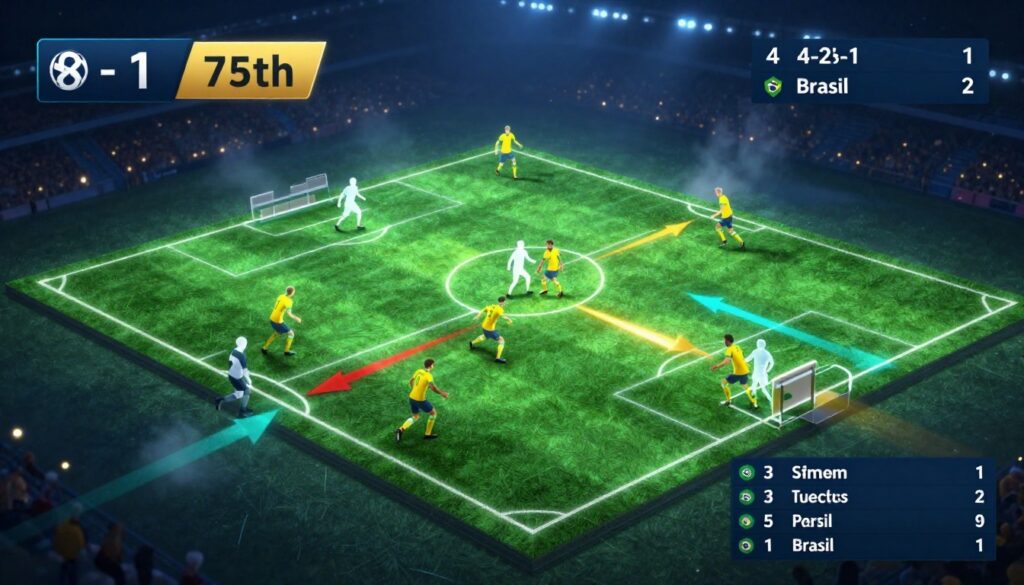
Here are Scotland’s possible scenarios:
If Scotland Beat Brazil
A victory guarantees qualification.
Three additional points would move Scotland into the automatic qualification positions and remove any dependence on other results.
Simply put, win and Scotland are through.
If Scotland Draw With Brazil
This scenario becomes complicated.
A draw would leave Scotland on four points.
Historically, four points often proved enough for qualification. However, the expanded World Cup format has changed the landscape dramatically.
Scotland would then enter a comparison with other third-placed teams from across the tournament.
Their fate would depend on:
- Goal difference
- Goals scored
- Results in other groups
- Fair play records if necessary
This is where things become uncomfortable.
If Scotland Lose to Brazil
A narrow defeat might still leave a tiny mathematical chance.
A heavy defeat would almost certainly eliminate them.
The bigger the loss, the worse Scotland’s goal difference becomes, making it increasingly difficult to compete with other third-placed teams.
When Do Scotland Play Brazil? Why a Draw May Not Be Enough
Many supporters assume a draw against Brazil would represent a successful result.
In football terms, it certainly would.
In qualification terms, it may not be enough.
Scotland would likely finish with four points and a goal difference around zero.
The challenge is that several other groups are producing similar records.
Multiple third-placed teams could finish on four points as well.
When teams are level on points, goal difference becomes the deciding factor.
One additional goal conceded or one missed opportunity could ultimately separate qualification from elimination.
That is why Scotland cannot simply aim to avoid defeat. They must remain competitive throughout the full 90 minutes.
When Do Scotland Play Brazil? Why Goal Difference Could Decide Their Fate
One of the biggest stories of this World Cup has been the importance of goal difference.
In previous tournaments, qualification often came down to points alone.
Now, the expanded structure means every goal matters.
For Scotland, protecting their goal difference could be almost as important as collecting points.
Imagine two scenarios:
Scenario One
Scotland lose 1-0 to Brazil.
Goal difference remains manageable.
Their qualification hopes survive.
Scenario Two
Scotland lose 4-0 to Brazil.
Goal difference collapses.
Their chances virtually disappear.
The difference between those outcomes may determine whether Scotland progress or head home.
When Do Scotland Play Brazil? Results Scotland Need Elsewheres
Even before asking when do Scotland play Brazil, many fans are already calculating other results.
Several outcomes could help Scotland’s cause.
Group L
Scotland would benefit if England defeat both Panama and Ghana comfortably.
This would prevent those teams from accumulating enough points to challenge in the third-place rankings.
Group J
Scotland need Argentina and Austria to continue winning.
That would leave Jordan and Algeria with limited opportunities to climb the standings.
Groups A and B
Draws between teams fighting for third place would be extremely helpful.
Shared points generally reduce the number of teams capable of reaching stronger qualification totals.
The overall objective is simple.
Scotland need as many rival third-placed teams as possible to finish with low point totals.
When Do Scotland Play Brazil? Can Scotland Shock Brazil?
History suggests it will be difficult.
Brazil have dominated this fixture over the years.
Scotland have not beaten Brazil since 1974, and Brazil have won the overwhelming majority of meetings between the two nations.
Yet there are reasons for cautious optimism.
Brazil have not looked unstoppable during this tournament.
Their scoreless draw against Morocco exposed some weaknesses in possession. Even their win against Haiti took time to develop before the goals arrived.
Scotland’s compact defensive structure and counter-attacking style could potentially create problems.
Steve Clarke’s side do not need to dominate possession.
They simply need to remain organised, disciplined, and clinical when opportunities arise.
When Do Scotland Play Brazil? Key Players Who Must Deliver
Scott McTominay
McTominay has been one of Scotland’s most influential performers.
His energy, ball carrying, and willingness to drive forward provide an essential attacking outlet.
Against Brazil, his physical presence could be vital.
Andrew Robertson
The captain endured a difficult moment against Morocco.
However, great leaders respond to setbacks.
Scotland will need Robertson’s experience, composure, and defensive quality.
John McGinn
Few players embody Scotland’s fighting spirit more than McGinn.
If Scotland are to create chances against Brazil, his movement and creativity will play a major role.
The Defensive Unit
This match may ultimately be decided by Scotland’s ability to stay compact.
Every tackle, interception, and clearance could have knockout-stage implications.
When Do Scotland Play Brazil? Miami Becomes Scotland’s Defining Moment
The defeat in Boston is now history.
What matters is what happens next.
Miami presents Scotland with one final opportunity to take control of their destiny.
The margins are incredibly fine.
A win guarantees qualification.
A draw creates nervous waiting.
A heavy defeat could end the dream.
Football tournaments often produce moments that define generations of supporters. This match has the potential to become one of those occasions.