
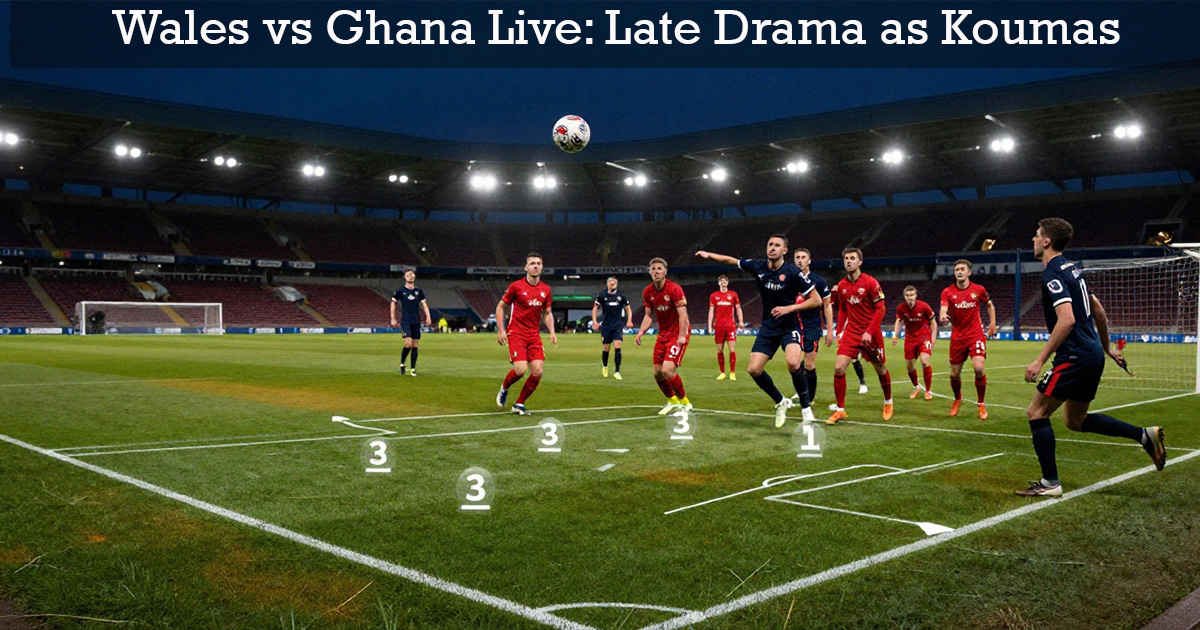
Wales vs Ghana live delivered exactly what most people expected from a friendly — moments of energy, long stretches of control, and a final scoreline that ultimately felt like it didn’t change anything meaningful.
At the Cardiff City Stadium, the match between the Wales national football team and the Ghana national football team ended 1-1, but the story went far beyond the score. Lewis Koumas scored a stoppage-time equaliser that cancelled out Caleb Yirenkyi’s well-taken counterattack goal.
Still, if you were searching for deep competitive answers from this Wales vs Ghana live encounter, you probably left with more questions than clarity.
Wales vs Ghana Live Match Overview
From the opening whistle, Wales vs Ghana live showed two teams operating in very different emotional spaces.
Wales played like a side trying to impress at home. Ghana played like a team managing risk ahead of bigger tournaments.
The match flow looked like this:
- Wales dominated possession early
- Ghana stayed compact and waited patiently
- Chances came, but finishing quality was inconsistent
- The game slowed into a tactical chess match
- Late substitutions changed the rhythm completely
Despite 18,000+ fans in attendance, Wales vs Ghana live often felt like a rehearsal rather than a battle.
First-Half Tactical Battle in Wales vs Ghana Live
The first half of Wales vs Ghana live was defined by structure over chaos.
Wales lined up in a 4-2-3-1 formation. The idea was simple: use width, feed the central striker, and overload half-spaces.
Key attacking moments included:
- A header from Brennan Johnson going straight at the keeper
- A powerful shot crashing off the crossbar
- A blocked attempt from Daniel James after a clever Brooks pass
But despite the intent, Wales struggled to break Ghana’s defensive shell.
Ghana, meanwhile, used a flexible 3-4-3 that often dropped into a 5-4-1 without the ball. This made the Wales vs Ghana live rhythm extremely slow in possession phases.
Thomas Partey sat deep, cutting passing lanes and disrupting tempo before being substituted later.
By halftime, the match statistics told the truth:
- Wales shots: 11 (most blocked or off target)
- Ghana shots: fewer, but more direct
- Score: 0-0
- Entertainment value: debatable
Wales vs Ghana Live: How Ghana Took Control Briefly
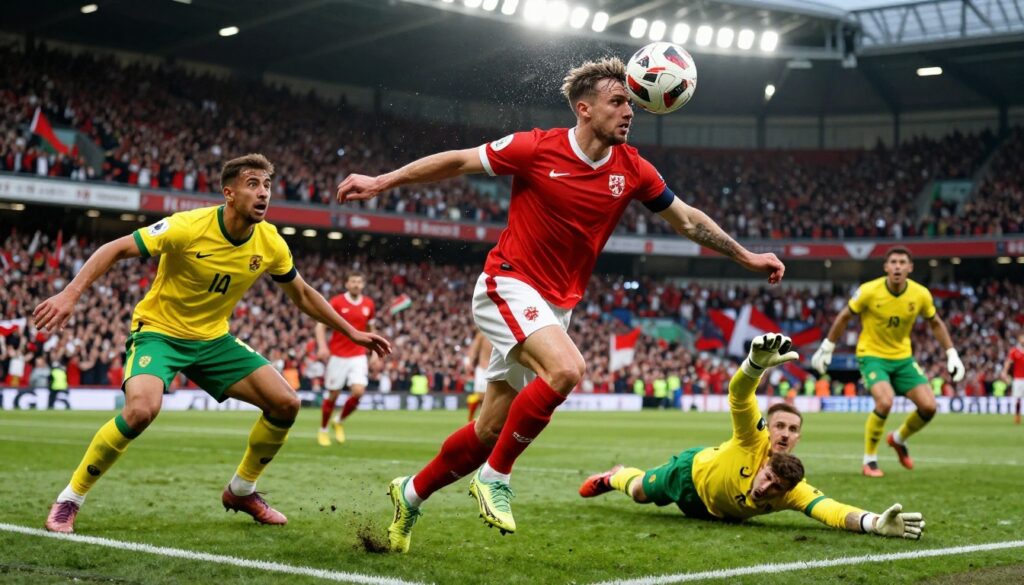
The most surprising moment of Wales vs Ghana live came in the 66th minute.
After a rare Welsh attack broke down, Ghana launched a lightning counterattack.
In seconds:
- A quick pass split midfield
- Ernest Nuamah drove forward
- Danny Ward saved the initial shot
- Caleb Yirenkyi reacted first and finished the rebound
Just like that, Ghana led 1-0.
It was a reminder of their biggest strength: transition football.
Even when under pressure for long periods, Ghana needed only a few seconds to change the game.
But this is also where Wales vs Ghana live revealed a limitation — Ghana rarely built sustained attacking pressure beyond counters.
Late Drama and Koumas Equaliser in Wales vs Ghana Live
As the match entered its final stages, Wales vs Ghana live shifted dramatically.
Wales made multiple substitutions, injecting young energy and urgency. The pressure became constant:
- Cross after cross into the box
- Corners piling up
- Ghana pinned deep
- Defensive clearances increasing
Then came stoppage time.
A perfectly weighted cross from the right found Lewis Koumas, who timed his run brilliantly and headed the ball into the bottom corner.
1-1.
The stadium erupted.
For Wales, it felt like pride restored. For Ghana, it felt like two points lost in a competitive match scenario — even though it wasn’t one.
Tactical Insights from Wales vs Ghana Live
Beyond the scoreline, Wales vs Ghana live delivered a few important tactical lessons.
1. Wales need sharper finishing
They created enough chances but lacked killer instinct in key moments.
2. Ghana rely heavily on transitions
Their attacking identity is built around speed, not sustained buildup.
3. Midfield control was split
Neither team fully dominated central areas for long stretches.
4. Defensive discipline stood out
Both teams defended deep blocks well, especially Ghana.
5. Substitutions changed everything
Fresh legs were more impactful than starting structures.
What Wales vs Ghana Live Means Going Forward
If you strip away emotion, Wales vs Ghana live was a classic friendly in every sense.
For Wales:
- Encouraging attacking structure
- Promising young players emerging
- Still no clear cutting edge in final third
For Ghana:
- Solid defensive organization
- Dangerous counterattacks
- Lack of sustained attacking pressure
The biggest takeaway is simple: neither side revealed full tactical identity, but both showed enough individual quality to remain competitive in their upcoming fixtures.