
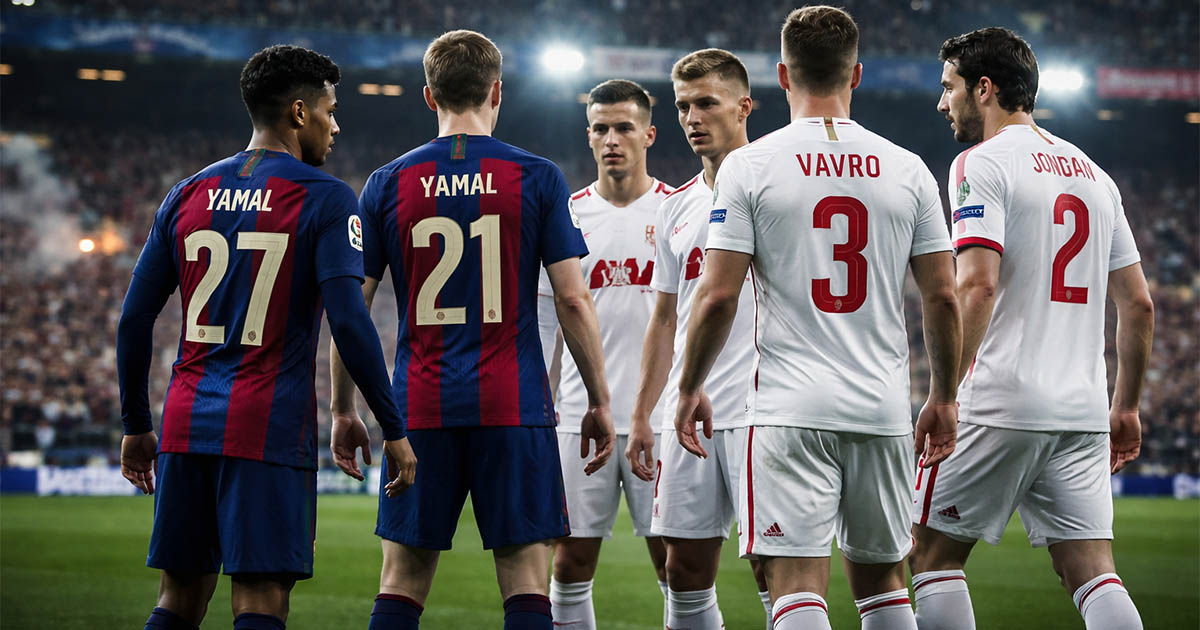
Copenhagen’s Compact Defense Makes Barcelona vs FC Copenhagen Dangerous
How FC Copenhagen’s Low Block Disrupts Barcelona’s Possession Game
At first glance, the fixture may look routine. One of Europe’s most decorated clubs against a team many casual fans underestimate. Yet football has a way of punishing assumptions. Barcelona vs FC Copenhagen Is More Dangerous Than Expected, not because of headlines or hype, but because of subtle realities beneath the surface.
Matches like these often test discipline more than talent, patience more than flair, and mentality more than tactics. Barcelona’s identity is evolving, youth is being trusted, and expectations remain enormous. Copenhagen, on the other hand, arrive with structure, belief, and nothing to lose.
When those dynamics collide, danger follows. Here’s why this contest carries far more risk than most predict.

1. Copenhagen’s Compact Defensive Shape
Barcelona’s philosophy thrives on space. When that space disappears, the game changes entirely. One reason Barcelona vs FC Copenhagen Is More Dangerous Than Expected lies in Copenhagen’s disciplined defensive organization.
The Danish champions are masters of compactness. Their defensive lines move as a unit, compressing passing lanes and forcing opponents wide. They don’t chase recklessly. Instead, they wait, frustrate, and absorb pressure. Against possession-heavy sides, this approach has repeatedly proven effective.
Barcelona’s buildup often depends on rhythm and repetition. When defenders deny central access and overload the flanks, Barça are pushed into crosses rather than combinations. This is precisely the scenario Copenhagen want to create.
Patience becomes essential, but patience is also where mistakes happen.
Why Barcelona Struggles Against Low-Block Discipline
Low blocks are not new to Barcelona, yet they remain a recurring challenge. The issue isn’t creativity—it’s tempo. When circulation slows, defenders settle. When movement becomes predictable, the advantage shifts.
Copenhagen’s back line stays narrow, forcing wide play without panicking. Fullbacks rarely overcommit. Midfielders track runners relentlessly. Every sideways pass buys them time.
This is where frustration creeps in. Shots are forced. Riskier passes are attempted. And suddenly, possession becomes pressure instead of control.
That’s why Barcelona vs FC Copenhagen Is More Dangerous Than Expected, even before the first whistle.
2. High-Pressure Counterattacks From Copenhagen
Defending deep is only half the plan. Copenhagen counter with intent. Once possession is recovered, they transition quickly, targeting the spaces left behind by advancing fullbacks and midfielders.
Barcelona’s high line magnifies this risk. One misjudged pass, one poorly timed press, and the entire defensive structure is exposed.
This isn’t theoretical. It’s a pattern. Copenhagen are efficient in transition, prioritizing vertical movement over possession. They don’t aim to dominate the ball—they aim to punish mistakes.
How Quick Transitions Can Catch Barça Off Guard
Young teams love attacking. They commit bodies forward. But recovery runs require experience, communication, and anticipation.
When Copenhagen break, they break with numbers. Wingers sprint into open channels. Central attackers pull defenders wide. The goal isn’t beauty—it’s chaos.
Barcelona’s defenders must make split-second decisions under pressure. Step up or drop? Hold shape or engage? One wrong choice can turn a quiet match into a dangerous one.
This constant threat ensures Barcelona vs FC Copenhagen Is More Dangerous Than Expected for a team still refining its balance between attack and control.
3. Barcelona’s Young Core Under Pressure
Barcelona’s future is bright, but youth brings volatility. Trusting young players creates energy, creativity, and fearlessness—but also inconsistency.
Matches where Barcelona are expected to dominate can be mentally harder than derbies or knockouts. The pressure to perform, to entertain, and to win comfortably weighs heavily.
That pressure plays into Copenhagen’s hands.
The Mental Test Facing Lamine Yamal and the Midfield

Lamine Yamal represents everything exciting about Barcelona’s new era. Confidence, unpredictability, and fearlessness. But high expectations can become burdens.
Defenders will target him physically. They’ll close him down aggressively, challenge his decisions, and test his patience. Young players often respond by forcing moments instead of letting them develop.
The same applies across the midfield. Riskier passes are attempted. Defensive discipline slips. And composure wavers.
This mental chess match is a key reason Barcelona vs FC Copenhagen Is More Dangerous Than Expected—because pressure affects youth differently than experience.
4. Set-Piece Threats That Change Games
In matches where open play stalls, set pieces become decisive. Copenhagen understand this better than most.
They treat corners and free kicks as scoring opportunities, not restarts. Every delivery is rehearsed. Every run has purpose.
Barcelona, historically, have struggled to fully eliminate set-piece vulnerabilities. Even when dominating possession, one lapse can undo ninety minutes of control.
Why Dead-Ball Situations Favor Copenhagen
Copenhagen’s physical presence gives them an edge. Tall defenders, aggressive movement, and precise deliveries create chaos in crowded penalty areas.
Barcelona’s zonal marking demands absolute focus. One missed assignment, one late jump, and the scoreboard changes.
Set pieces also shift momentum. A goal from a corner doesn’t just affect the score—it affects psychology. Suddenly, the underdog believes. Suddenly, pressure multiplies.
That’s another reason Barcelona vs FC Copenhagen Is More Dangerous Than Expected despite differences on paper.
5. Tactical Rotation and Squad Management
Modern football demands rotation. Barcelona must manage minutes, injuries, and long-term objectives. But rotation comes with risk—especially against disciplined opponents.
Copenhagen thrive when facing rotated lineups. Chemistry gaps appear. Pressing triggers misalign. Communication suffers.
Even minor adjustments can disrupt Barcelona’s rhythm.
How Barça’s Lineup Choices Could Increase Risk
Changing one or two players alters passing patterns, defensive coverage, and pressing intensity. Copenhagen analyze these details relentlessly.
They press selectively, targeting unfamiliar pairings and forcing errors. They exploit hesitation and punish indecision.
Rotation doesn’t mean weakness—but it does introduce unpredictability. And unpredictability fuels danger.
Once again, Barcelona vs FC Copenhagen Is More Dangerous Than Expected because of the fine margins created by tactical necessity.
6. The Underdog Advantage
Perhaps the most underestimated factor of all is psychology. Copenhagen arrive without expectation. Barcelona carry all of it.
Underdogs play freely. Favorites play cautiously.
This dynamic shifts momentum before kickoff.
Why Copenhagen Has Less to Lose—and More Freedom to Attack
Copenhagen aren’t expected to dominate possession. They aren’t expected to dictate tempo. Every successful tackle, every intercepted pass, every counterattack builds belief.
Freedom breeds bravery.
Barcelona, meanwhile, must justify dominance. Every missed chance draws scrutiny. Every slow build invites impatience.
This imbalance of pressure is precisely why Barcelona vs FC Copenhagen Is More Dangerous Than Expected in ways statistics rarely capture.
The Bigger Picture: Why This Match Matters
This fixture isn’t just about points or progression. It’s a measuring stick.
For Barcelona, it tests maturity. Can Barcelona control the game without forcing the tempo?
Will composure hold when creativity dries up?
And most importantly, how will a young squad respond to expectation?
For Copenhagen, it’s an opportunity. A chance to prove that organization, belief, and discipline still matter in modern football.
And for neutral fans, it’s a reminder that football remains gloriously unpredictable.
Tactical Adjustments Barcelona Must Get Right
To neutralize the danger, Barcelona must prioritize patience over urgency. Faster circulation doesn’t always mean faster attacks. Drawing Copenhagen out of shape is essential.
Fullbacks must balance ambition with caution. Midfielders must resist forcing vertical passes. And defensive transitions must be immediate and collective.
Control, not chaos, will decide the outcome.
Failure to respect these details reinforces why Barcelona vs FC Copenhagen Is More Dangerous Than Expected until the final whistle.
Final Thoughts
Football history is filled with matches where dominance on paper meant little on grass. This is one of those fixtures.
Copenhagen’s discipline, transitions, set-piece threat, and psychological freedom combine into a genuine challenge. Barcelona’s youth, expectations, and evolving identity add uncertainty.
When these elements collide, danger emerges—not loudly, but relentlessly.
That’s why Barcelona vs FC Copenhagen Is More Dangerous Than Expected, not once, not twice, but every minute the game remains unresolved.
Also read for more information : Barcelona rally to beat København, secure round of 16 spot
Read next on Dribkick : Lakers vs LA Clippers: The 7 Hidden Turning Point Fans Missed