
Alabama’s Offensive Identity Will Undergo a Major Reset
Why the quarterback room becomes the focal point
For decades, college football has been governed by a soft form of feudalism. You had your kings in Tuscaloosa, your royalty in Columbus, and your occasional rebels in places like Athens or Clemson. Then you had Indiana. Indiana was the program that provided the “get-right” game for the Big Ten’s elite. They were the “basketball school” that played football out of obligation.
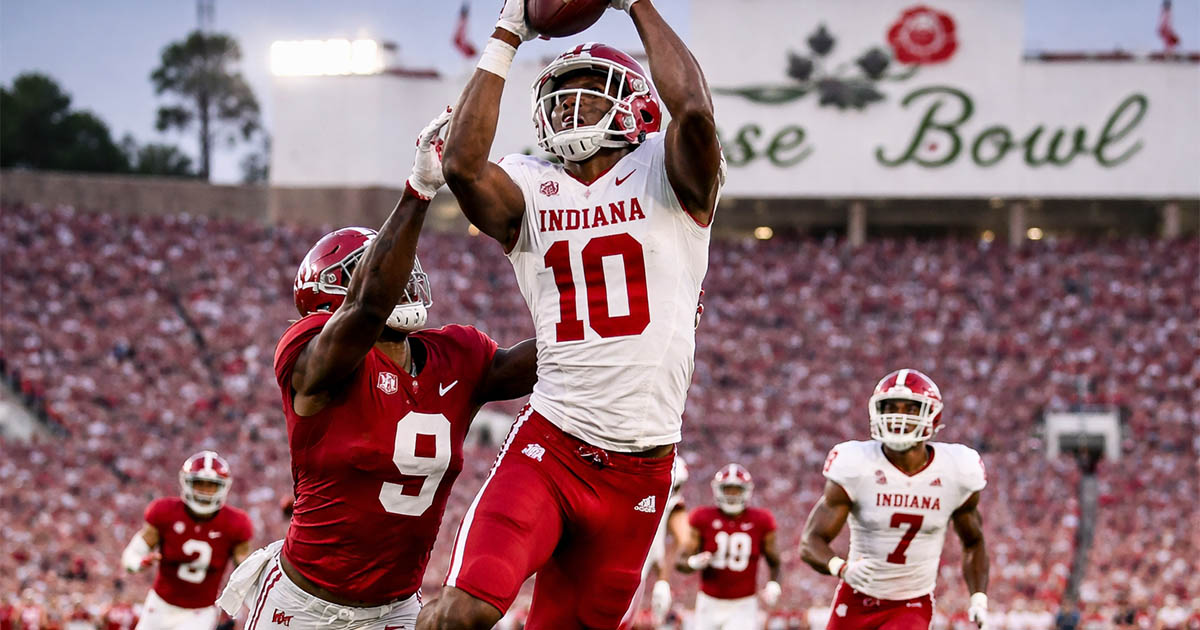
But after what we just witnessed in the Rose Bowl—a 38-3 massacre that will be whispered about in Bloomington for the next fifty years and debated in Alabama for the next five—the map of the sport has been officially set on fire. The Indiana vs Alabama outcome didn’t just reset expectations; it dismantled a dynasty.
Indiana didn’t just beat Alabama. They out-Alabamad Alabama. They were more physical, more disciplined, and, most shockingly, more confident. When the final whistle blew and Curt Cignetti was handed the trophy, it didn’t feel like a Cinderella story. It felt like a changing of the guard. Here is how the Indiana vs Alabama ripple effects will shape the future.
1. Alabama’s Offensive Identity Will Undergo a Major Reset
The most glaring takeaway from Indiana vs Alabama wasn’t just the score; it was the total collapse of the Tide’s offensive rhythm. For the better part of fifteen years, Alabama’s recruiting pitch was simple: We have the best players, therefore we win. And it worked. But this game exposed a rot in the foundation of that philosophy.
Moving forward, the biggest shift in Tuscaloosa won’t be the playbook—it will be the locker room culture. We’re going to see Kalen DeBoer stop chasing the “flash” in the transfer portal and start chasing “fit.” The “Alabama Reset” is going to be painful. It means benched stars—much like we saw with Ty Simpson in the third quarter after the IU defense broke his rhythm. It means a transition to a more “cerebral” offensive identity where the quarterback is asked to be a point guard rather than a superhero. The days of a single athlete bailing out a broken play with pure magic are fading.
2. Why the Quarterback Room Becomes the Focal Point
In the wake of Indiana vs Alabama, the Crimson Tide must reconcile with the fact that their passing game was held to just 151 total yards. The quarterback room is now under a microscope. Whether it is Ty Simpson, Austin Mack, or a high-profile portal addition, the new “Standard” is no longer about raw arm talent.
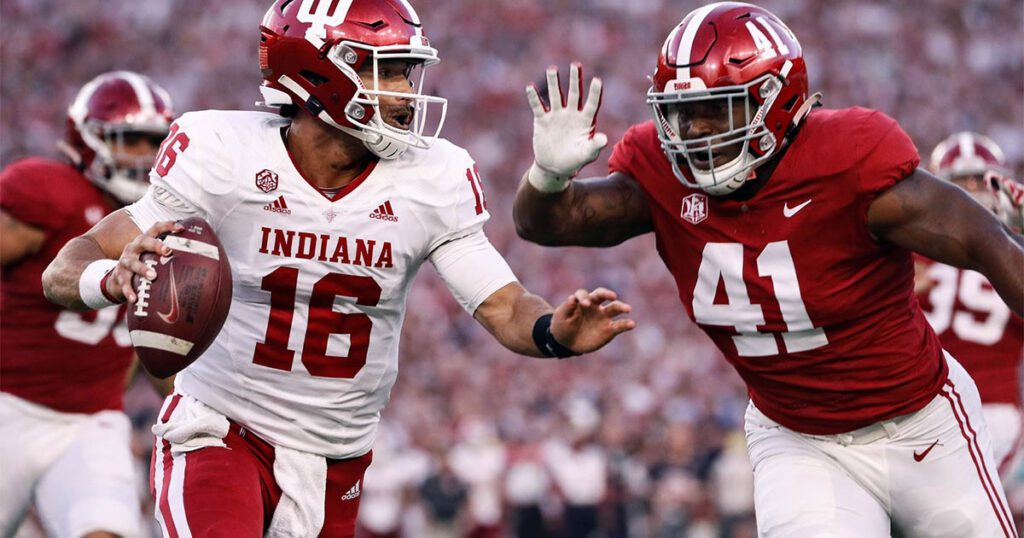
The focus will shift toward decision-making and pre-snap recognition. Indiana proved that a disciplined “system” quarterback like Fernando Mendoza—who went 14-of-16—is more valuable than a five-star athlete who can’t read a disguised zone. Alabama’s next starter won’t just be competing for a job; they’ll be the face of a total philosophical overhaul aimed at preventing another Indiana vs Alabama embarrassment.
3. Curt Cignetti: The Architect of the “New Big Ten”
Let’s be honest: when Curt Cignetti arrived at Indiana and told everyone “I win,” we all rolled our eyes. It sounded like standard coach-speak from a guy who had never sat in the pressure cooker of a Power Four program.
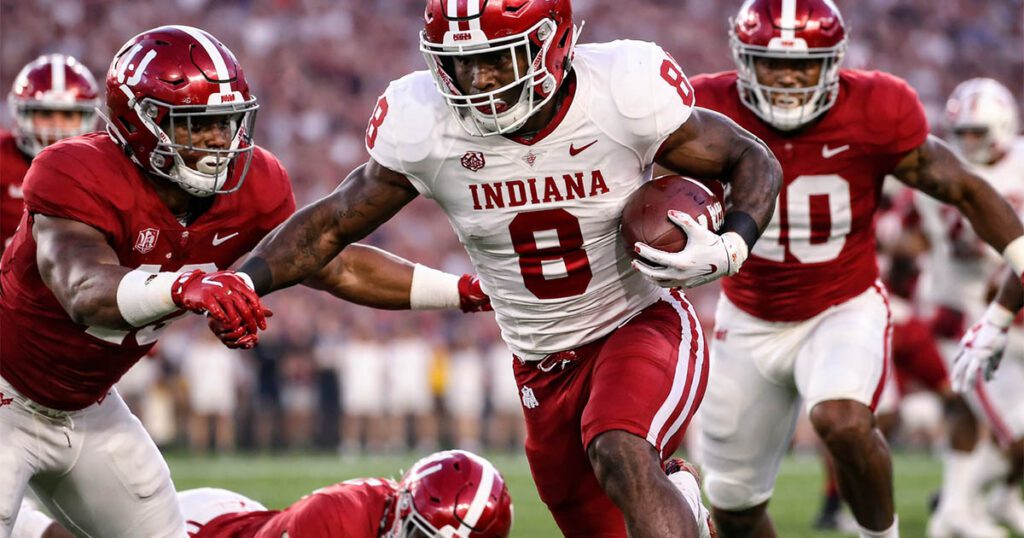
We aren’t rolling our eyes anymore. After a 14-0 start and a Rose Bowl trophy, Cignetti is officially the most dangerous man in the sport. He has proven that the “Indiana Model”—taking high-IQ veterans and demanding absolute tactical perfection—is the antidote to the “Pay-to-Play” model of the SEC. He took the “winningest loser” in college football history and turned them into a team that held Alabama to a staggering 23 rushing yards. This version of Indiana vs Alabama is now the blueprint for every “middle-class” program in the country.
4. The Great Defensive Migration to Bloomington
If you’re a 4-star linebacker in Ohio or a disgruntled safety in the portal at Florida, where do you look now? You look at Indiana. For years, Indiana struggled to recruit defense because they were always on the field for 40 minutes a game while the offense went three-and-out.
But the defensive masterclass they put on in Indiana vs Alabama—suffocating the Tide’s explosive playmakers—is a recruiting commercial that money can’t buy. Expect Indiana to become a “Defensive Factory.” We’re going to see a shift where defenders choose Bloomington because they want to play for a staff that knows how to disguise pressures. D’Angelo Ponds and Aiden Fisher didn’t just play a game; they put on a clinic that redefined what an “elite” defense looks like in 2026.
5. The “Portal Panic” and Alabama’s Roster Overhaul
Alabama is about to enter a period of aggressive, almost desperate, roster recalibration. The Indiana vs Alabama tape revealed that the Tide’s offensive line, once the gold standard of the sport, has become porous.
Prediction: Alabama will be the most active team in the Transfer Portal over the next two cycles, but not for wide receivers or “skill” guys. They are going to go on a shopping spree for 320-pounders with mean streaks. They realized against Indiana that they got bullied in the trenches. The “Tide Reload” will be about size and violence. If you aren’t 315 pounds and capable of moving a mountain, you won’t have a spot on the Alabama bus next season.
6. The Death of the “SEC Invincibility” Narrative
For a decade, the narrative has been: The SEC’s worst is better than the Big Ten’s best. The Indiana vs Alabama result officially killed that. The “ripple effect” here is psychological. Every team in the country just saw a program with significantly less “composite talent” dismantle a southern giant through better coaching and more heart.
Moving forward, the gap between the “Elite Four” and the rest of the field has narrowed because the transfer portal allows teams like Indiana to fix their holes in a single offseason. The monopoly is over. Indiana vs Alabama was the first crack in the dam, and now the water is rushing through.
7. The Mendoza Factor: From Underdog to Heisman Standard
Fernando Mendoza’s performance wasn’t just about winning a game; it was about validating a new type of quarterback. He wasn’t the highest-rated recruit, but his efficiency in Indiana vs Alabama was surgical.
Indiana’s offense is no longer playing “catch-up.” With Mendoza returning and the confidence of a Rose Bowl win, they are becoming the “elite” standard for efficiency. Prediction: Indiana will land a top-5 wide receiver in the portal this cycle simply because players saw how Mendoza distributes the ball to six different targets in a single half. They aren’t just “efficient” anymore; they are a destination.
8. The Birth of the “Culture Era”
When we look back at the 2020s, we will point to January 1, 2026, as the moment the “Culture Era” began. The Indiana vs Alabama showdown was a referendum on how football should be played.
For a long time, college football was about who had the biggest stadium and the most boosters. But in the NIL and Portal era, money is everywhere. What isn’t everywhere is culture. Alabama had more money and more history. Indiana had a coach who refused to let his players believe they were inferior. The “Indiana Blueprint” will become the most copied strategy in the nation.
The Bottom Line: Why Indiana vs Alabama Matters
This wasn’t just a game. It was a 38-3 statement of intent. Indiana proved that if you have a group of “overlooked” veterans who know their jobs and a coaching staff that can out-scheme a legacy, you can slay a dragon.
Alabama is at a crossroads. They can either evolve and realize that the world has caught up to them, or they can stubbornly cling to the past and watch more teams like Indiana pass them by. As for the Hoosiers? They aren’t the scrappy underdog anymore. As the No. 1 seed, Indiana now stands at the top of the playoff picture — and they’ve proven it as Rose Bowl champions. And after the Indiana vs Alabama massacre, they are two wins away from a National Championship.
Indiana blows out Alabama to win Rose Bowl
Miami vs Ohio State: 6 Hidden X-Factors No One Is Talking About
New Mexico vs Minnesota: 9 Lessons From the Gophers’ Dramatic OT Bowl Win